Overview
In several countries a basic current account costs nothing to hold, which is unusual for a service involving infrastructure, staff, regulation and fraud losses. The account is not actually free; it is funded by revenue you do not see and, in part, by other customers paying charges you avoid.
Understanding how free banking is funded is not just interesting — it tells you where to look for the costs that apply to you, and why the cheapest account on paper may not be the cheapest for your own pattern of use.
Where the money comes from
Several streams, none of which appear on your statement as a fee.
The interest margin. The largest source for most banks. They pay you little or nothing on your current account balance and lend that money out at a higher rate. The gap is the revenue. A bank holding large non-interest-bearing current account balances is earning on all of it.
This also explains something useful: when interest rates rise, the value of your balance to the bank rises, which is why current account switching incentives and savings rates tend to improve in higher-rate environments.
Interchange. When you pay by card, the retailer’s bank pays a fee, part of which reaches your card issuer. You do not pay it; the retailer does, and it is reflected in prices generally. Capped by regulation in some jurisdictions.
Overdraft charges. Paid by a minority of customers, and historically a very large contribution. This is the clearest cross-subsidy in retail banking: customers who go overdrawn fund accounts for customers who do not.
Foreign transaction charges. On card use and withdrawals abroad, plus the margin on currency conversion. Significant for travellers, invisible to everyone else.
Other charges. Returned payments, unarranged borrowing, certain branch services, paper statements where charged, international transfers.
Cross-selling. The current account is the relationship. Mortgages, loans, credit cards, insurance, savings and investments are where the profit is, and the free account is the entry point.
Packaged account fees, where customers pay monthly for bundled benefits.
Business and wealth customers, who pay fees and generate margins that support the retail operation.
The cross-subsidy, plainly
If you never go overdrawn, never travel, never miss a payment and never buy another product, you are an unprofitable customer — and your account is funded by the balance you leave, the interchange on your spending, and other customers’ charges.
This has two practical implications:
You should expect to be marketed to. The account exists to begin a relationship. The offers are not necessarily bad, and they are not impartial advice.
Charges fall heavily on particular groups. People who go overdrawn, people who travel, people who miss payments. Which means the question is never whether an account is free, but whether it is free for you.
Packaged accounts: do the arithmetic
Accounts charging a monthly fee for bundled benefits — travel insurance, breakdown cover, mobile phone insurance, better rates.
They can be good value and frequently are not. Work it out:
- List what is included
- Price each one separately, as you would buy it
- Remove anything you would not buy — it is worth nothing to you
- Remove anything you already have. The commonest problem: travel insurance duplicating an annual policy, or phone insurance duplicating home contents cover
- Check the exclusions and limits. Bundled insurance frequently has lower limits, higher excesses and age restrictions. Travel cover in packaged accounts often restricts cover above a certain age or excludes pre-existing conditions — check whether it actually covers your household
- Check whether a claim requires registration in advance
- Compare the total against the annual fee
Then check whether you are already paying for one. A substantial number of people hold packaged accounts whose benefits they have never used or cannot use, sometimes for years. Check your statement for a monthly account fee and find out what it buys.
If the benefits do not exceed the fee, downgrade. Banks will move you to a free account on request, though they may not volunteer it.
Where to look for your own costs
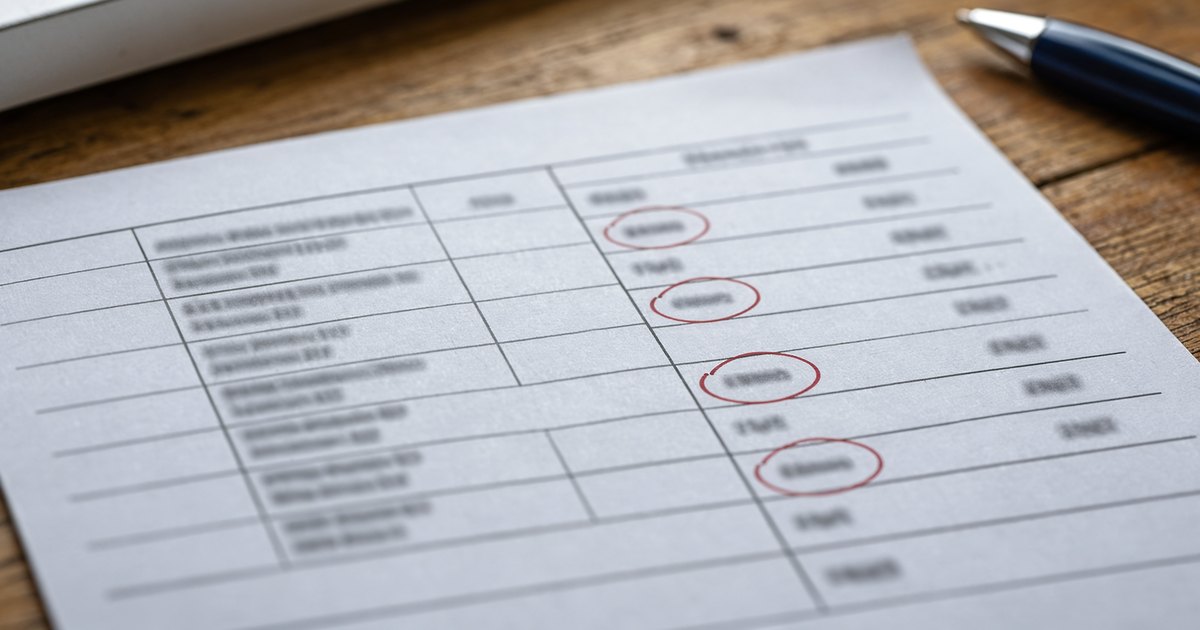
Get the published tariff and check these against your own behaviour:
| Cost | Who it affects |
|---|---|
| Monthly account fee | Packaged account holders |
| Arranged overdraft interest and fees | Anyone using an overdraft |
| Unarranged overdraft charges | Anyone exceeding a limit |
| Returned payment fees | Anyone whose payments fail |
| Foreign transaction charges | Travellers and overseas shoppers |
| Cash withdrawal charges abroad | Travellers |
| Currency conversion margin | Anyone spending in another currency, usually unnoticed |
| International transfer costs | Anyone sending money abroad |
| Lost interest on balances | Anyone holding significant current account balances |
| Cash machine charges | Users of some machines |
| Paper statement or service charges | Depends on the institution |
The two that people most often overlook: the currency conversion margin, which is a cost presented as an exchange rate rather than a fee, and the interest forgone on balances left in a current account.
On the second: money sitting in a current account paying little or nothing, when a savings account would pay meaningfully more, is a real cost. For anyone holding a significant working balance, moving the surplus to savings is one of the simplest improvements available.
Working out your real cost
Take twelve months of statements and add up:
- Every charge the bank levied
- Every foreign transaction and the conversion margin where you can identify it
- Every overdraft and returned payment cost
- Any monthly account fee
- Plus the interest you could have earned on your average balance had it been in a savings account
That total is what your free account costs you, and for some people it is substantial while for others it is genuinely close to nothing.
Then compare against an alternative priced for your pattern — a different account type at the same bank, an account with no foreign transaction charges if you travel, or a provider with better overdraft terms if you use one.
Practical conclusions
- Free banking is genuinely free for some people, mainly those who stay in credit, do not travel, and keep only a working balance in the account
- It is expensive for people who go overdrawn, and that is where to focus if it applies to you
- It is expensive for travellers on the wrong account, and a card with no foreign transaction charges is an easy fix
- Keep only a working balance in the current account and the rest in savings
- Check whether you pay a monthly fee, and what it buys
- Expect marketing, and treat it as marketing
- Compare on your own usage, not on headline features
Frequently asked questions
How do banks make money on a free account?
Mainly the interest margin on your balance, plus card interchange, overdraft and foreign transaction charges, and selling other products.
Who subsidises free banking?
Largely customers who go overdrawn, travel, or pay other charges — and everyone through the balances they leave earning little.
Are packaged accounts worth the fee?
Sometimes. Price each benefit separately, remove anything you would not buy or already have, and check the exclusions and age limits.
What cost do people most often miss?
The currency conversion margin when spending abroad, and the interest forgone on current account balances.
Can I downgrade from a packaged account?
Yes. Banks will move you to a free account on request, though they may not suggest it.
Is free banking really free?
For some people, close to it. For anyone using an overdraft or travelling, often not.
Two checks on your statement
Look for a monthly account fee. If there is one, list what it includes, price each item separately, remove anything you already have or would never use, and compare. A large number of people pay for bundled benefits they cannot actually claim on.
Then add up twelve months of charges, including every foreign transaction cost, and ask whether your average current account balance is earning anything. For most people one of those two is where their free banking is actually being paid for.
If the answer is overdraft charges, that is the thing worth fixing first — it is usually the largest number on the page.
Account structures, fee schedules, interchange regulation, overdraft pricing, packaged account benefits and their exclusions, interest rates and consumer protections vary significantly by country and institution and change. Check your own account’s current published tariff, read any bundled insurance policy terms including exclusions and age limits before relying on it, verify deposit protection on any savings account, and seek regulated financial advice for your own circumstances. This is general information, not financial advice, and not a recommendation of any product or institution.



Be First to Comment